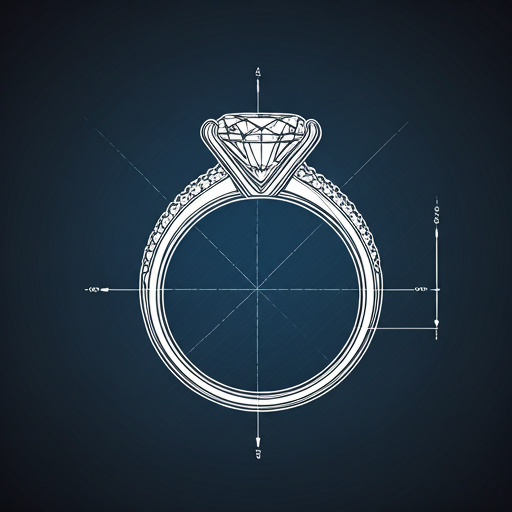
The Anatomy
of a Ring
To understand a ring is to understand the dialogue between architecture and light. Explore the precise terminology and craftsmanship that defines a masterpiece.
A Legacy of
Boundless Circles
"The ring is more than an ornament; it is a structural commitment to the infinite."
The history of the ring spans millennia, evolving from primitive bands of woven reeds in ancient Egypt to the sophisticated platinum alloys of the modern era. Originally symbols of eternity and social standing, rings transitioned into the quintessential token of betrothal during the Roman Empire.
It was not until the Archduke Maximilian of Austria presented a diamond ring to Mary of Burgundy in 1477 that the tradition of the diamond solitaire took flight. This pivotal moment transformed the ring from a simple band into a canvas for geological brilliance and architectural innovation.
Today, The Diamond Gallery continues this lineage. Each setting is drafted with mathematical precision, ensuring that the stone is not merely held, but celebrated. The dialogue between the metal's strength and the stone's fragility is where true luxury resides.
Defining the Silhouette
A setting is the stage upon which a diamond performs. Each style offers a different narrative of light.
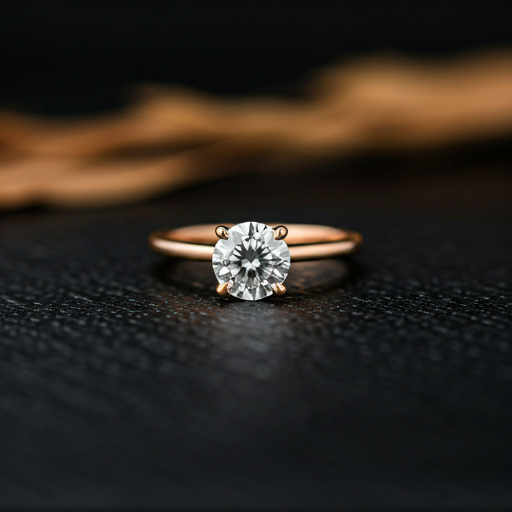
The Solitaire
The ultimate purist's choice. A single stone elevated by prongs to maximize light return from every angle.
Timeless • Singular • Pure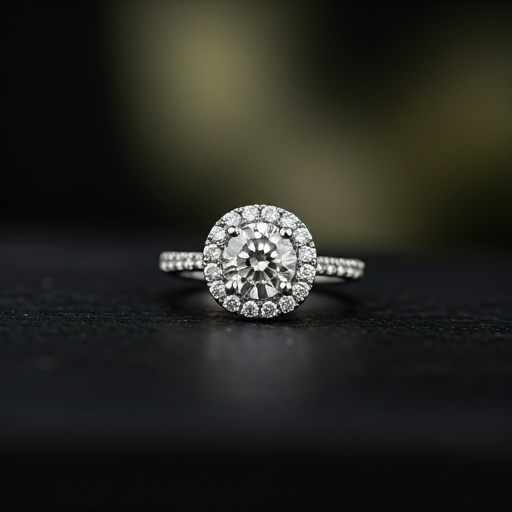
The Halo
A central stone encircled by a pavé border of smaller diamonds, creating an illusion of grander scale.
Radiant • Detailed • Opulent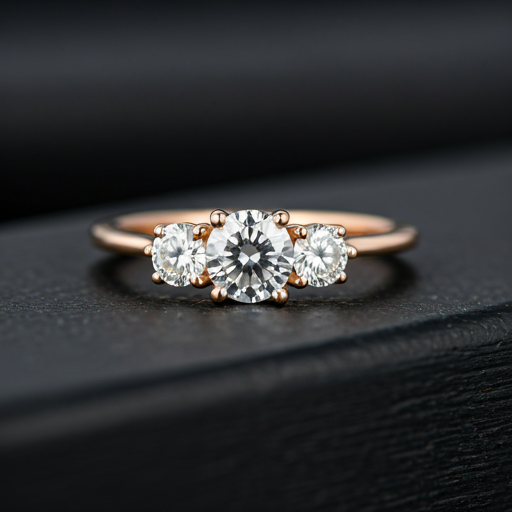
The Trilogy
Symbolizing the past, present, and future. A balanced composition of three stones in a row.
Symbolic • Balanced • Classic
Mastery of the
Bespoke Setting
Structural Integrity
Each prong is hand-tuned to ensure optimal security without obscuring the diamond's pavilion. We use high-density alloys for lifelong durability.
Micro-Pavé Precision
Our artisans set stones under 40x magnification, ensuring every microscopic bead of metal is perfectly symmetrical.
The Comfort Fit
The interior of every shank is meticulously rounded—a 'comfort fit' that ensures the ring feels as natural as skin.
Anatomy Quick Reference
The metal 'teeth' that grip the diamond. Common configurations: 4 or 6 prongs.
The area visible from the side view of the ring, often featuring intricate scrollwork.
The upper parts of the ring shank that join onto the setting.
The depth of the setting designed to protect the fragile tip of the diamond.
Examine Perfection in Person
Book a private viewing at our Cape Town or Johannesburg showrooms to explore our collection of artisanal settings.
Request Private Appointment